How to Choose the Right Backup Power Inverter for Your Needs?
In today's world, power outages can disrupt daily life and business operations. The need for a reliable backup power source is crucial. A Backup Power Inverter provides a solution for many situations. According to a recent report from the International Energy Agency, over 1.3 billion people lack access to electricity. This highlights the importance of portable power solutions.
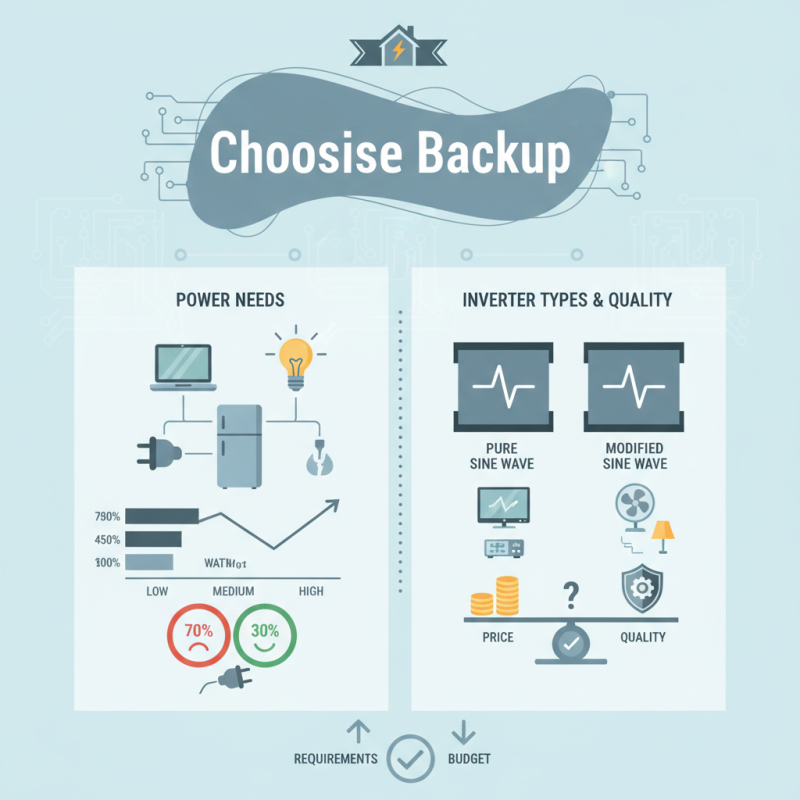
When choosing a Backup Power Inverter, consider wattage needs. The inverter must match your appliances' requirements. Many households underestimate this; as a result, they face power shortages. A study shows that 70% of users select inverters with insufficient capacity, leading to frustration during outages.
Additionally, the market offers various inverter types: pure sine wave and modified sine wave options. Each serves different purposes. Users often overlook the quality factor in favor of low prices. This can lead to performance issues and damage to devices in the long run. It's important to weigh power requirements against budget constraints. Balancing these factors ensures a suitable choice. Ignoring them can result in regret.
Understanding the Basics of Backup Power Inverters
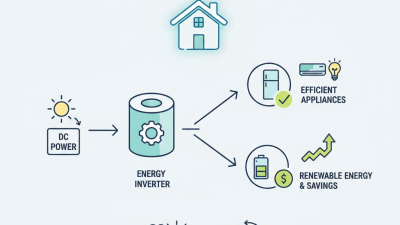
When selecting a backup power inverter, understanding its fundamental components is vital. A backup power inverter converts DC (direct current) to AC (alternating current). This is crucial for running household appliances during outages. According to a recent industry report, the demand for inverters is projected to grow by 15% annually over the next five years. Such growth reflects the increasing need for reliable power solutions in homes and businesses.
The capacity of an inverter is measured in watts. It determines how many devices you can power simultaneously. Many people overlook this aspect. A common mistake is assuming a smaller inverter can meet all needs. For instance, a 1000-watt inverter might not support a refrigerator, which typically requires around 800-1200 watts starting power. It's essential to calculate the combined wattage of your devices before making a choice.
Moreover, battery type plays a significant role. Lead-acid batteries are cheaper but shorter-lived. Meanwhile, lithium-ion batteries are more efficient and last longer but carry a higher initial cost. This presents a dilemma. Cost versus longevity needs careful consideration. Many users feel overwhelmed by choices and don’t always research enough. Consulting a professional can provide clarity in navigating these challenges.
Identifying Your Specific Power Needs and Requirements
Choosing the right backup power inverter starts with understanding your specific power needs. Identify the devices you plan to power. Consider everyday appliances, like refrigerators or a few lights. Make a list. This helps you see the total wattage required. Don't underestimate small gadgets; they can add up quickly.
Think about how long you need the power for. Is it just a few hours or several days? This decision impacts the size and type of inverter you select. It's tempting to choose a cheaper option, but you want reliability. Check if the inverter can handle peak loads. Some devices need extra power to start, and not all inverters can manage that spike.
Finally, consider portability and safety features. Will you move it often? Is it safe to use indoors or outdoors? Not all inverters are created equal in this aspect. Make sure to reflect on these factors. Ignoring them could lead to inadequate power when you need it most. Your choices matter significantly in times of need.
Comparing Different Types of Inverters: Pure Sine vs. Modified Sine
When it comes to backup power inverters, understanding the difference between pure sine and modified sine wave inverters is crucial. Pure sine wave inverters produce a smooth and consistent waveform. This makes them ideal for sensitive electronics, like computers and medical devices. They provide cleaner power, reducing the risk of damage. Many users prefer them for home use and recreational vehicles.
On the other hand, modified sine wave inverters are a more budget-friendly alternative. They create a stepped waveform that may not suit all devices. Some appliances might run fine, while others could experience issues. For example, electric toothbrushes or dimmer switches may not function properly. It's essential to consider your specific needs before making a choice. A wrong decision could lead to frustration, especially if your devices fail during critical times.
Choosing the right inverter is not just about cost. It's also about compatibility and safety. You may need to reevaluate what devices you plan to power. It’s better to invest in quality than to face ongoing problems. Consider how often you will use it and in what situations. A wrong fit could cost more in the long run.
How to Choose the Right Backup Power Inverter for Your Needs? - Comparing Different Types of Inverters: Pure Sine vs. Modified Sine
| Type of Inverter |
Waveform Type |
Efficiency |
Cost |
Best Use Cases |
| Pure Sine Wave Inverter |
Pure Sine Wave |
90-95% |
Higher |
Sensitive electronics, medical equipment, and audio/video equipment |
| Modified Sine Wave Inverter |
Modified Sine Wave |
70-85% |
Lower |
General appliances, tools, and non-sensitive devices |
| Pure Sine Wave Inverter |
Pure Sine Wave |
90-95% |
Higher |
Off-grid solar systems, sensitive electronics |
| Modified Sine Wave Inverter |
Modified Sine Wave |
70-85% |
Lower |
Recreational vehicles, basic electrical tools |
Evaluating Features: Wattage, Efficiency, and Portability Considerations
When choosing a backup power inverter, wattage is a crucial factor. Understanding your power needs helps you select the right inverter. Calculate the total wattage of devices you intend to power. This includes appliances like refrigerators and lights. Keep in mind that some devices require more power at startup.
Efficiency is another important consideration. An efficient inverter minimizes energy waste. Look for models with high efficiency ratings. They provide more usable power, allowing you to run devices longer. Check the inverter’s conversion rate. It should convert DC power to AC power effectively.
Portability matters too, especially for those on the move. If you plan to use your inverter for camping or outdoor activities, weight and size are significant. A portable inverter should be compact and lightweight. However, small size sometimes compromises power capacity. Reflect on what features matter most for your lifestyle. Each choice can impact your overall experience.
Assessing Budget and Reliability When Choosing an Inverter
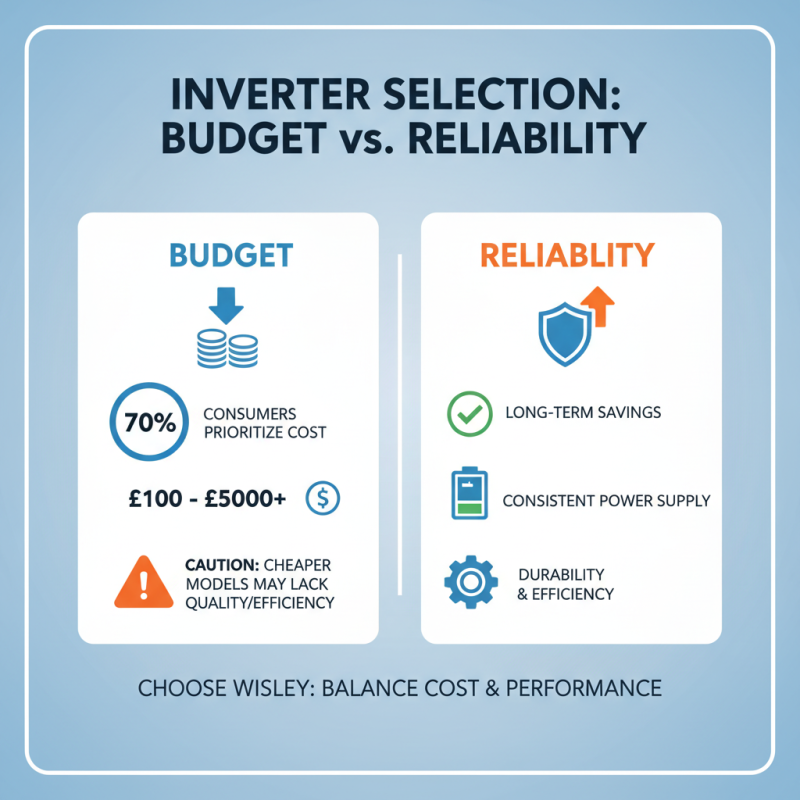
When selecting a backup power inverter, budget and reliability are paramount. Recent industry reports indicate that around 70% of consumers prioritize cost over all other factors. Inverters can range from a few hundred to several thousand dollars. If you aim for affordability, be cautious. Cheaper models might compromise on quality and efficiency.
Reliability should also guide your decision. Studies show that inverters with a proven track record can reduce the risk of power failures by up to 30%. You want an inverter that can handle your essential appliances without strain. Many inverters claim peak performance, but only a few live up to those promises during power outages.
Consider the long-term costs associated with a lower-quality inverter. Frequent repairs or replacements can add up. Therefore, investing in a more reliable model might yield cost savings over time. Examine warranties and customer reviews thoroughly. Yet, it's essential to remain skeptical. Not all high-rated products perform as advertised. Be prepared to reevaluate your choices.