How to Choose the Right Backup Power Inverter for Your Needs?
Choosing the right backup power inverter is crucial for maintaining energy reliability during outages. According to the U.S. Energy Information Administration, nearly 3 million households experienced power interruptions last year. Such disruptions highlight the need for effective backup solutions.
Backup power inverters convert DC power into AC power, enabling essential appliances to function during outages. The market is expected to grow by 10% annually, driven by increased awareness and demand. However, selecting the right inverter can be complex. Factors like power capacity and connectivity options are essential considerations.
While many brands offer various models, not all are perfect for every application. User feedback often reveals shortcomings in specific units, leading to dissatisfaction. Evaluating your specific power needs and researching reliable options is fundamental. Navigating this landscape requires understanding both the technical specifications and user experiences to find the best match for your needs.
Understanding the Basics of Backup Power Inverters
When considering a backup power inverter, it's essential to understand the basics. A backup power inverter converts DC (direct current) into AC (alternating current). This conversion allows you to power home appliances during outages. According to the latest industry data, the market for power inverters is experiencing growth, projected to reach USD 12 billion by 2026.
Choosing the right inverter size matters. A common misconception is that all inverters can handle the same loads. Each device requires different wattages. For example, a refrigerator may need 1200 watts to start, while a light bulb needs only 60 watts. Determine the combined wattage of your crucial devices. Experts recommend a buffer of 20-30% over your total requirement to ensure smooth operation.
It’s also important to consider efficiency ratings. Most inverters operate between 80% to 95% efficiency. A lower efficiency means wasted energy and higher costs. Regular monitoring and maintenance can address performance issues. Ignoring these factors may lead to underperformance and frustration during outages. Understanding these basics can help you make informed decisions about backup power solutions.
Identifying Your Power Needs and Load Requirements
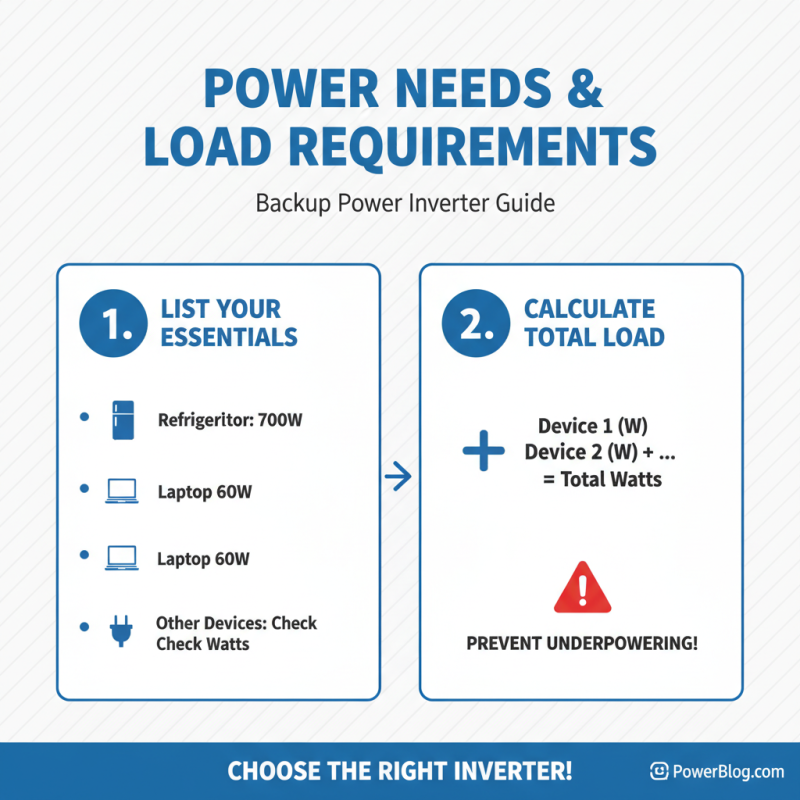
Choosing the right backup power inverter starts with understanding your specific power needs. Each device you intend to power has unique wattage requirements. Listing your essential appliances is crucial. For example, a refrigerator may need 700 watts, while a laptop can run on just 60. Knowing these details helps prevent underpowered situations.
Consider the total wattage of all devices you plan to run simultaneously. Add a safety margin to this total. This approach ensures reliability. Some users underestimate their needs. They face frustrations when devices fail to run. It's essential to be realistic about consumption. Do an inventory of your devices and their wattage.
In addition, think about surge power. Some tools, like refrigerators, require extra power to start. Check their ‘starting watts.’ Ignoring this can lead to poor performance of the inverter. Finally, prioritize efficiency. A higher-efficiency inverter minimizes energy loss. Assessing your load requirements carefully will navigate these challenges. Balancing these factors leads to an informed choice that meets your backup power needs.
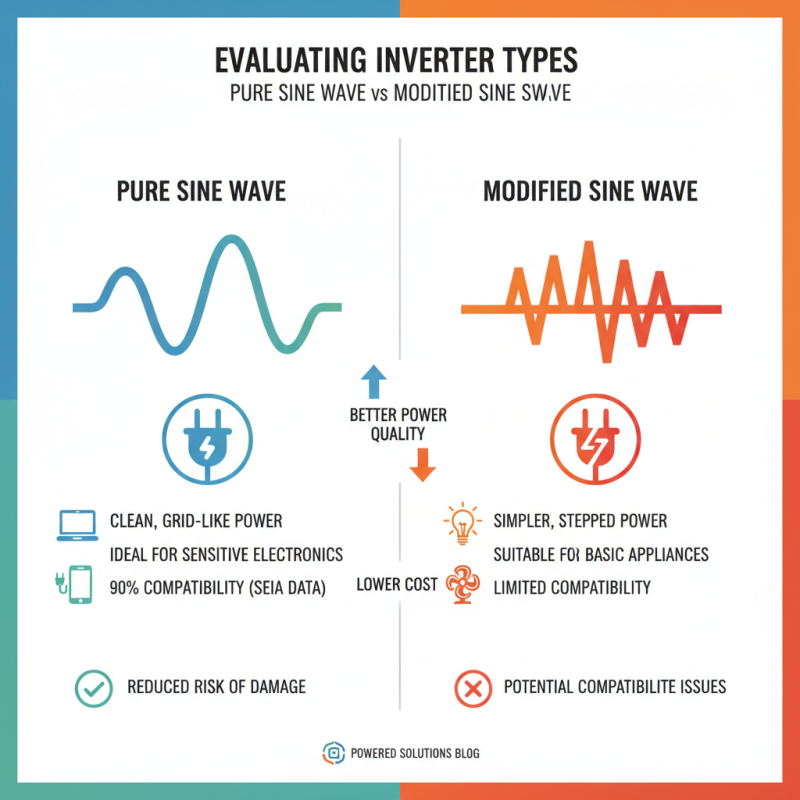
Evaluating Inverter Types: Pure Sine Wave vs Modified Sine Wave
When selecting a backup power inverter, one crucial consideration is the type of waveform it produces. Pure sine wave inverters provide a smooth and consistent power output, mimicking the electricity from the grid. This feature is vital for sensitive electronics. Data from the Solar Energy Industries Association indicates that approximately 90% of all electronic devices operate better on pure sine waves. They ensure compatibility and reduce the risk of damage over time.
In contrast, modified sine wave inverters output a more distorted waveform. These are less expensive and often sufficient for less sensitive equipment, like lights and simple appliances. While they function adequately for these applications, the trade-off comes with efficiency. According to a study from the National Renewable Energy Laboratory, devices running on modified sine wave can experience up to 30% less efficiency. This disparity highlights the importance of evaluating your devices' needs before deciding which inverter is suitable.
It's essential to assess your particular application and prioritize the long-term performance of your equipment. While modified sine wave inverters may seem appealing due to lower upfront costs, they can lead to higher operational costs. Further, they might fail to power complex devices, leaving users in frustrating situations. Each choice carries tangible benefits and potential drawbacks, making careful consideration paramount in your decision-making process.
Assessing Inverter Capacity and Runtime for Your Equipment
When choosing a backup power inverter, assessing its capacity and runtime is crucial for your specific needs. The inverter's capacity, measured in watts, determines how much power it can deliver at once. If you intend to power heavy-duty equipment like refrigerators or air conditioners, you will need a higher capacity. Calculate total wattage by adding the wattage of all devices to be powered. Consider any initial surge requirements.
Runtime is another essential aspect. It refers to how long the inverter can provide power before needing a recharge. Factors affecting runtime include battery size and load demand. For instance, a larger battery allows for longer operation, but it requires ample space and weight to accommodate it. If your equipment draws high power, be prepared for shorter runtimes.
Make sure to think about your typical usage. If your demands fluctuate, a flexible inverter might be beneficial. Carefully weighing the right balance between capacity and runtime can be challenging. However, understanding your requirements will lead you to a more effective choice. Ensure you back your decision with reliable data and thorough research to avoid potential pitfalls.
Key Features to Consider When Choosing a Backup Power Inverter
Choosing the right backup power inverter involves understanding your needs. A key feature to consider is power output. It should match the wattage of your essential devices. For instance, consider the total wattage of lights, refrigerators, or medical equipment. Use a power calculator to determine your requirements accurately.
Another crucial aspect is the inverter type. Pure sine wave inverters provide cleaner power. This is vital for sensitive electronics. Modified sine wave inverters are more affordable but can cause issues with certain devices. Don't overlook battery compatibility. Ensure your inverter can handle the type and size of batteries you plan to use.
Efficiency ratings matter as well. An inverter with higher efficiency uses less energy. Higher efficiency means longer battery life during use. Additionally, look for features like automatic shutdown or overload protection. These safety measures can prevent potential damage. Reflecting on these details can lead to a more informed decision. Balancing all factors may require thoughtful consideration, but it's essential for your power needs.