10 Essential Tips for Choosing the Best Solar Inverters for Your Home
Choosing the right solar inverters for your home is a critical step in harnessing the power of solar energy effectively. Solar inverters play a pivotal role in converting the direct current (DC) generated by solar panels into alternating current (AC), which is essential for powering your household appliances. With an increasing number of homeowners opting for renewable energy solutions, understanding the nuances of solar inverters is vital. This decision not only affects the efficiency of your solar power system but also has implications for your energy savings and the longevity of your investment.
In this guide, we will explore ten essential tips that will empower you to make an informed choice when selecting solar inverters. Each tip is designed to highlight important factors such as efficiency, compatibility, and warranty options, providing a holistic approach to evaluating the myriad of products available in the market. By considering these aspects, you can ensure that your solar energy system is optimized for performance and reliability, thus maximizing your energy independence while minimizing costs in the long run. Whether you are a first-time buyer or looking to upgrade your existing system, these insights will equip you with the knowledge needed to choose the best solar inverters tailored to your specific needs.
Understanding Solar Inverters: Types and Their Functions
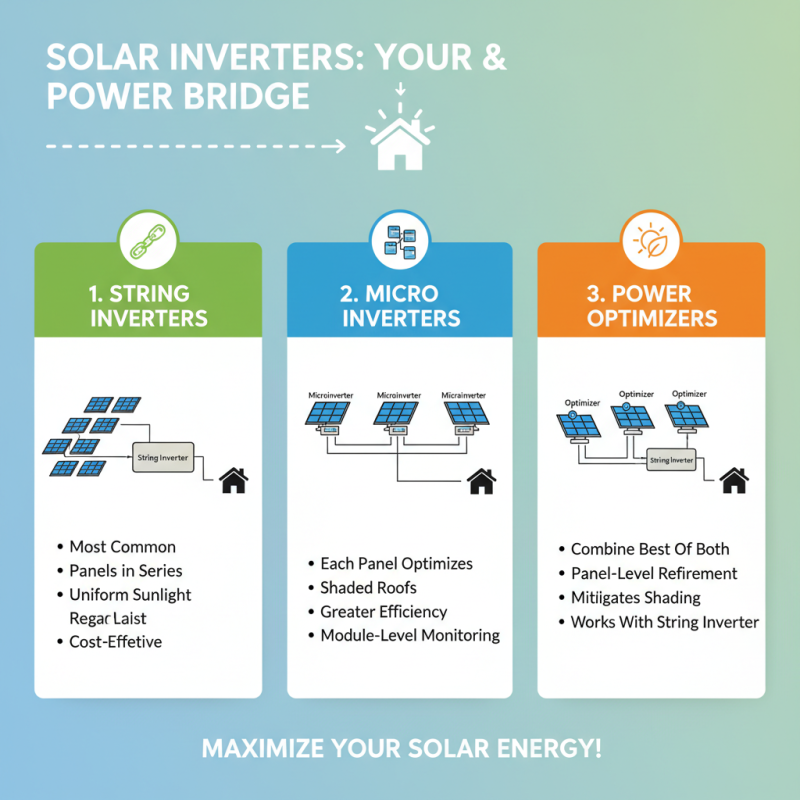
Solar inverters play a crucial role in the conversion and management of solar energy systems. These devices take the direct current (DC) generated by solar panels and convert it into alternating current (AC), which is the form of electricity most commonly used in homes. Understanding the different types of solar inverters is essential to choose the right one for your home. Generally, there are three main types: string inverters, microinverters, and power optimizers. String inverters are the most commonly used, suitable for installations with uniform sunlight exposure. In contrast, microinverters are ideal for roofs with shading issues, as they optimize the output of each panel individually.
According to the International Renewable Energy Agency (IRENA), the performance of solar inverters significantly impacts the overall efficiency of a solar energy system, with around 10-20% of energy losses attributed to the inverter itself. Additionally, a report by the U.S. Department of Energy highlights that the latest advancements in inverter technology, including smart inverters, can enhance energy self-consumption and improve grid management. These innovations enable homeowners to not only maximize their energy efficiency but also actively participate in energy trading and demand response programs. Thus, understanding the types and functions of solar inverters can empower homeowners to make informed decisions that align with their energy needs and sustainability goals.
Key Specifications to Consider: Efficiency Ratings and Output Capacity
When selecting a solar inverter for your home, two key specifications stand out: efficiency ratings and output capacity. Efficiency rating reflects how effectively an inverter converts direct current (DC) from solar panels into alternating current (AC) used in your home. According to the National Renewable Energy Laboratory, a good solar inverter should have an efficiency rating of at least 95%. Higher efficiency means more of the solar energy generated can be used, which directly affects your energy savings over time.
Output capacity, often measured in kilowatts (kW), indicates the maximum power an inverter can handle at any given time. It’s crucial to choose an inverter that can accommodate your entire solar system's output during peak production hours. The California Energy Commission recommends that homeowners size their inverters to be slightly larger than their solar panel array's capacity to accommodate potential future increases in energy consumption and ensure optimal usage.
Tip: Research and compare different inverter models’ efficiency at varying output levels, as performance can fluctuate significantly depending on the load conditions. Additionally, consider inverters with a built-in monitoring system, allowing you to track energy production and consumption in real-time, thus optimizing your energy management strategy.
10 Essential Tips for Choosing the Best Solar Inverters for Your Home - Key Specifications to Consider: Efficiency Ratings and Output Capacity
| Specification |
Description |
Value |
| Efficiency Rating |
Percentage of energy conversion from solar to usable electricity |
95% - 98% |
| Output Capacity |
Maximum power output during peak sunlight |
3 kW - 10 kW |
| Warranty Period |
Duration of warranty provided by manufacturer |
5 - 10 years |
| Weight |
Weight of the inverter unit for installation consideration |
15 kg - 25 kg |
| Operating Temperature Range |
Temperature range within which the inverter operates optimally |
-25°C to 60°C |
| MPPT (Maximum Power Point Tracking) |
Feature allowing the inverter to optimize energy harvest |
1 - 4 MPPTs |
| Grid Type Compatibility |
Compatibility with grid type (single/three phase) |
Single and three phase |
| Size |
Dimensions of the inverter |
60 cm x 40 cm x 20 cm |
| Noise Level |
Noise generated during operation |
Less than 30 dB |
| Safety Features |
Built-in protection for electrical faults and overloads |
Yes (Varies by model) |
Evaluating the Reliability and Longevity of Solar Inverters
When selecting solar inverters, the reliability and longevity of the device are crucial factors that can significantly influence the overall efficiency of your solar energy system. Reliability can be assessed through performance data such as the inverter's failure rates, which reflect how often it needs repairs or replacements. Look for models that have a proven track record, particularly those backed by comprehensive warranties that indicate trust in their durability. It’s advisable to consult user reviews and independent testing reports, as they can provide insights into how various inverters perform over time under different operating conditions.
Longevity is equally important, as a longer-lasting inverter will not only reduce your maintenance costs but also maximize the return on your investment. Typically, high-quality solar inverters are designed to last over 10 years, with some advanced models extending beyond 20 years. Factors affecting longevity include the materials used in construction and the technology employed. Inverters should ideally incorporate advanced cooling systems to prevent overheating, which is a common cause of premature failure. Additionally, opting for inverters with features such as automatic voltage regulation can help in maintaining optimal functioning over their lifespan.
Comparison of Solar Inverter Efficiency Ratings
The Importance of Warranty and Support Services in Inverter Selection
When selecting a solar inverter for your home, the warranty and support services offered by the manufacturer can significantly influence your decision. A robust warranty ensures that you are protected against manufacturing defects and performance issues over an extended period. Given that solar inverters are critical components of your solar energy system, understanding the terms and duration of the warranty is essential. Look for warranties that extend beyond the industry standard, as this often reflects a manufacturer’s confidence in their product’s reliability and longevity.
In addition to warranty coverage, the quality of support services is a vital factor to consider. Reliable customer service can ease the troubleshooting process and provide assistance in case of operational issues. It’s advisable to assess the availability of technical support, response times, and whether the company offers installation and maintenance services. Comprehensive support can enhance your overall experience with solar technology, ensuring that your system operates efficiently and effectively throughout its lifespan.
Prioritizing both warranty and support services will help you choose an inverter that not only meets your energy needs but also provides peace of mind for years to come.
Cost Analysis: Initial Investment vs. Long-term Savings on Energy Bills
When considering solar inverters for your home, understanding the financial implications is crucial. The initial investment in solar energy systems can be significant, as prices for inverters vary based on efficiency, technology, and features. Homeowners should calculate the upfront costs, which include not just the inverter but also installation and any additional components needed for the solar array. This upfront expenditure can be daunting; however, it is important to weigh it against the long-term financial benefits.
Investing in a high-quality solar inverter can lead to substantial savings on energy bills over time. By converting sunlight into usable electricity, efficient solar inverters help homeowners reduce or even eliminate their reliance on grid power. This transition can dramatically lower monthly utility costs. Additionally, many regions offer incentives such as tax credits and rebates, further improving the return on investment. Over a typical lifespan of 25 years for solar systems, the cumulative savings on energy can significantly outweigh the initial costs, making a well-considered choice in inverters a financially sound decision.