Why Use a Dimmer Switch for Better Lighting Control?
In modern homes, lighting plays a crucial role in creating the right atmosphere. One effective tool for enhancing lighting control is the dimmer switch. This small device allows homeowners to adjust the brightness of their lights easily. With a dimmer switch, you can transform a bright, sterile environment into a cozy sanctuary.
The beauty of a dimmer switch lies in its versatility. It enables you to create different moods for various activities, whether it's a lively dinner party or a quiet movie night. However, many overlook its potential benefits. Some may find themselves sticking to fixed lighting levels, missing out on the ambiance a dimmer can provide. Adjusting light levels can be a slight hassle for those used to static settings, but the reward is often worth the effort.
Imagine hosting a gathering with soft lighting that encourages conversation. Picture yourself reading in a warm glow that reduces eye strain. This is where a dimmer switch shines. While its implementation may seem trivial, the impact on daily life can be profound, leading to deeper reflections on how we experience our living spaces.
Benefits of Using a Dimmer Switch for Lighting Control
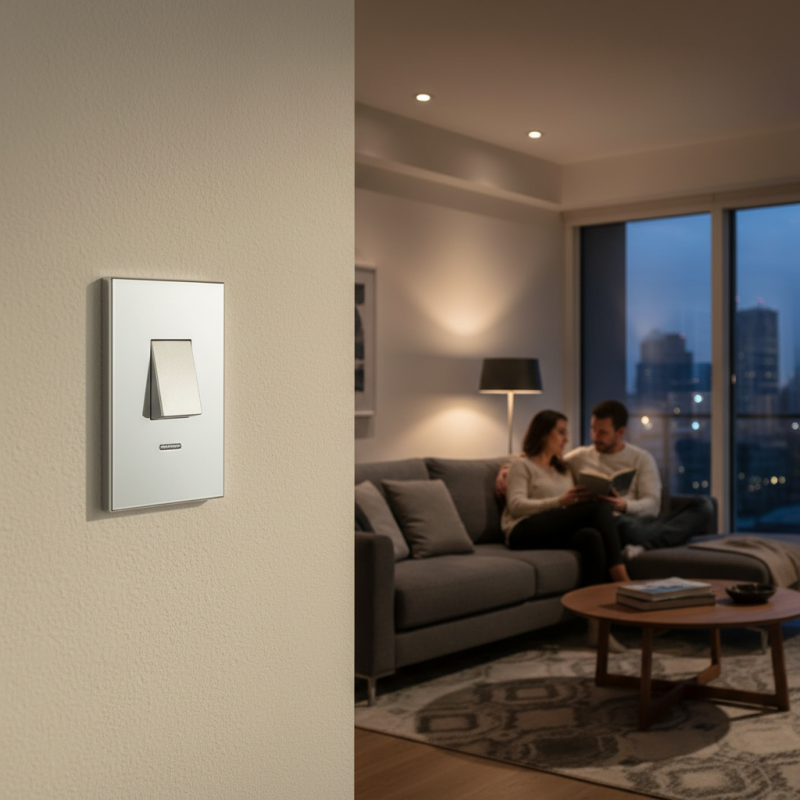
Dimmer switches offer an easy way to enhance lighting control in any space. They provide flexibility by allowing users to adjust brightness levels, creating the perfect ambiance for different activities. For example, a dimmed light can make a movie night cozier, while brighter lights are ideal for cooking or reading.
Using dimmer switches is not just about aesthetics. They can also improve energy efficiency. By lowering the light level, you reduce power consumption and extend the lifespan of your bulbs. This approach helps save money over time. It’s a practical decision for anyone looking to create a more sustainable home.
However, it’s essential to consider compatibility. Not all fixtures work well with dimmers. Some may flicker or buzz, leading to frustration. Testing different options may be necessary. Finding the right balance between light levels and fixture types can be a journey worth taking. Embracing this flexibility can lead to a more comfortable and inviting home environment.
Types of Dimmer Switches and Their Applications
Dimmer switches are versatile tools for enhancing lighting control in various settings. There are several types of dimmer switches available today, each with unique applications. The most common types include incandescent dimmers, LED dimmers, and smart dimmers. Incandescent dimmers are well-known for their simplicity and effectiveness. They can easily adjust the brightness of traditional incandescent bulbs.
LED dimmers, on the other hand, are essential for modern energy-efficient lighting. According to industry reports, using LED dimmers can increase energy savings by up to 20%. They must be compatible with specific LED fixtures, which can sometimes complicate the installation process. Smart dimmers offer advanced features like remote access via smartphone apps. They are particularly beneficial for creating mood lighting or scheduling automatic adjustments.
Tips: Consider your existing lighting setup before choosing a dimmer switch. Compatibility issues can arise, leading to potential flickering. Always check the wattage ratings and choose a dimmer that matches your bulbs. Experiment with different light levels to find the perfect ambiance for your space. A well-placed dimmer can transform any room into a cozy retreat or an energetic workspace.
Why Use a Dimmer Switch for Better Lighting Control? - Types of Dimmer Switches and Their Applications
| Type of Dimmer Switch |
Application |
Benefits |
Compatibility |
| Rheostat Dimmer |
General Lighting Control |
Simple to install, affordable |
Incandescent Bulbs |
| Electronic Low Voltage (ELV) Dimmer |
LED & Low Voltage Lighting |
Flicker-free dimming, energy efficient |
LED Drivers, Low Voltage Fixtures |
| Triac Dimmer |
Standard Incandescent & Halogen |
Widely available, works with many bulbs |
Incandescent and Halogen |
| Smart Dimmer |
Home Automation Systems |
Remote control, scheduling options |
Wi-Fi and Smart Bulbs |
| Magnetic Low Voltage (MLV) Dimmer |
Track Lighting Systems |
Durable, perfect for track systems |
Magnetic Transformers |
How to Install a Dimmer Switch: A Step-by-Step Guide
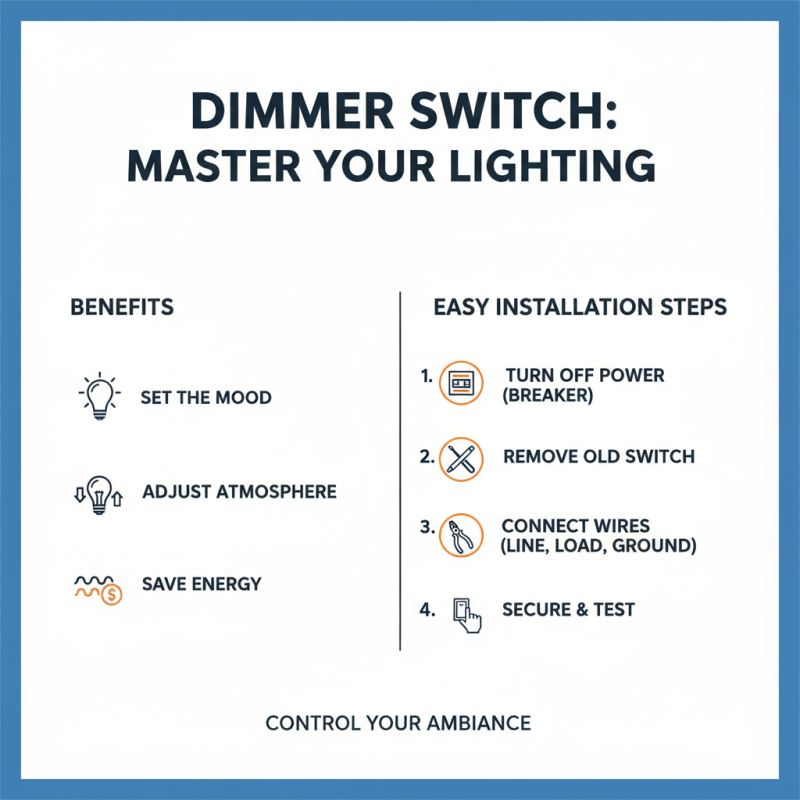
Installing a dimmer switch offers an easy way to control your lighting. It helps set the right mood in any room. Adjusting the light levels can change the entire atmosphere. But, it's essential to follow some basic steps to ensure correct installation.
Before starting, gather your materials. You’ll need a dimmer switch, wire connectors, and a screwdriver. Turn off the power at the circuit breaker. Safety should be your priority. Remove the old switch carefully. Check for any loose wires or damages. These issues can create problems later.
**Tip:** Take a photo of the wiring setup before removing the old switch. This can serve as a helpful reference.
Install the new dimmer switch by matching the corresponding wires. Connect the black wires to the dimmer. Secure the grounds as well. Tuck the wires neatly into the wall box. Finally, attach the dimmer switch to the wall.
**Tip:** Double-check connections to avoid flickering lights. It’s a common mistake that can easily be fixed.
Once installed, restore power and test the dimmer. Notice how the light changes. Adjust it to find your ideal brightness. Don’t hesitate to go back and tighten connections if needed. Your efforts will lead to a more flexible lighting experience.
Tips for Choosing the Right Dimmer Switch for Your Needs
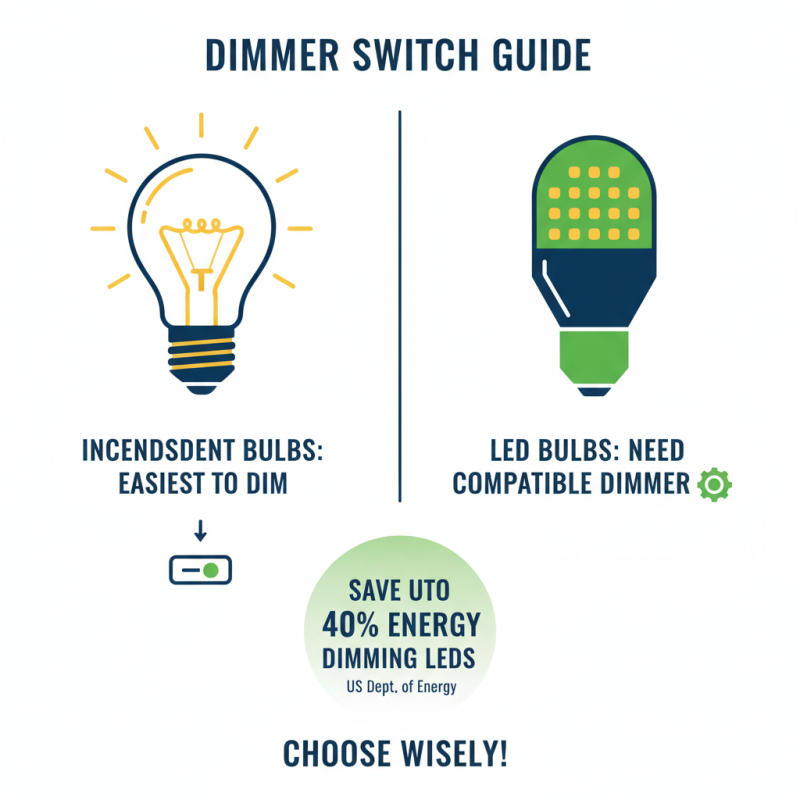
When choosing a dimmer switch, consider the type of bulbs you'll be using. Incandescent bulbs are the easiest to dim. However, LED bulbs need compatible dimmers. According to a report by the U.S. Department of Energy, dimming LEDs can save up to 40% energy. This statistic underlines why thoughtful selection is key.
Think about the control style as well. Some prefer a sliding dimmer, while others like a rotary or smart option. Each type has unique advantages and limitations. For example, smart dimmers offer convenience but might require Wi-Fi. A 2021 Home Lighting Trends survey found that 75% of homeowners want more control over their lighting. This shows a growing interest in adjustable solutions.
Installation can be another hurdle. Not all switches fit in existing boxes. Sometimes, a new box is necessary. This might add unexpected costs. Additionally, compatibility issues can arise, leading to frustration. It’s important to research thoroughly before purchasing. A little time spent investigating can save headaches later. Investing in the right dimmer switch can enhance your lighting experience significantly.
Common Issues with Dimmer Switches and How to Resolve Them
Dimmer switches provide superior control over lighting, but they can present common issues. One prevalent problem is flickering lights. Research indicates that about 15% of users experience this with older dimmers. This flickering often results from incompatible bulbs or outdated technology. For instance, LED bulbs might not work well with certain dimmer brands. Upgrading to compatible LED dimmers can significantly enhance performance, reducing flicker.
Another issue often faced is limited dimming range. Some users find that lights don’t dim low enough. This can result in a harsh ambiance or unnecessary brightness. A study by the Lighting Research Center shows that using high-quality dimmer switches can offer more range. Yet, selecting the right wattage for the dimmer matters. Dimmers rated lower than the total wattage of connected bulbs can lead to inefficiency. Testing different combinations can provide clearer options for optimal brightness.
The right installation is crucial, too. Improper installation can lead to overheating. This not only affects the dimmer's lifespan but can also pose safety risks. It's essential to follow guidelines closely or consult a professional. Many DIYers overlook this aspect, affecting overall satisfaction. Reflecting on these issues is vital for achieving the perfect lighting setup.
Importance of Using a Dimmer Switch for Better Lighting Control