How to Choose the Best Backup Inverter for Your Needs?
Choosing the right backup inverter can seem overwhelming. With many options available, understanding your specific needs is crucial. A backup inverter provides essential power during outages. It ensures that your home or business remains functional, even in emergencies.
When selecting a backup inverter, consider the power requirements of your devices. Different models can handle varying loads. Some may struggle with higher demands. Knowing the total wattage you need, both for essential appliances and any additional devices, can guide your choice. Additionally, think about how long you will need power. This impacts the inverter's battery capacity requirements.
Reflecting on your situation can clarify your choices. Are you looking for portability or stationary use? Some inverters are designed for easy transport, while others are meant for permanent setups. Researching brands and reading reviews can enhance your confidence in your decision. However, be critical of overly positive reviews that may not reflect real experiences. Your aim is to find a reliable backup inverter that balances efficiency with your specific power needs.

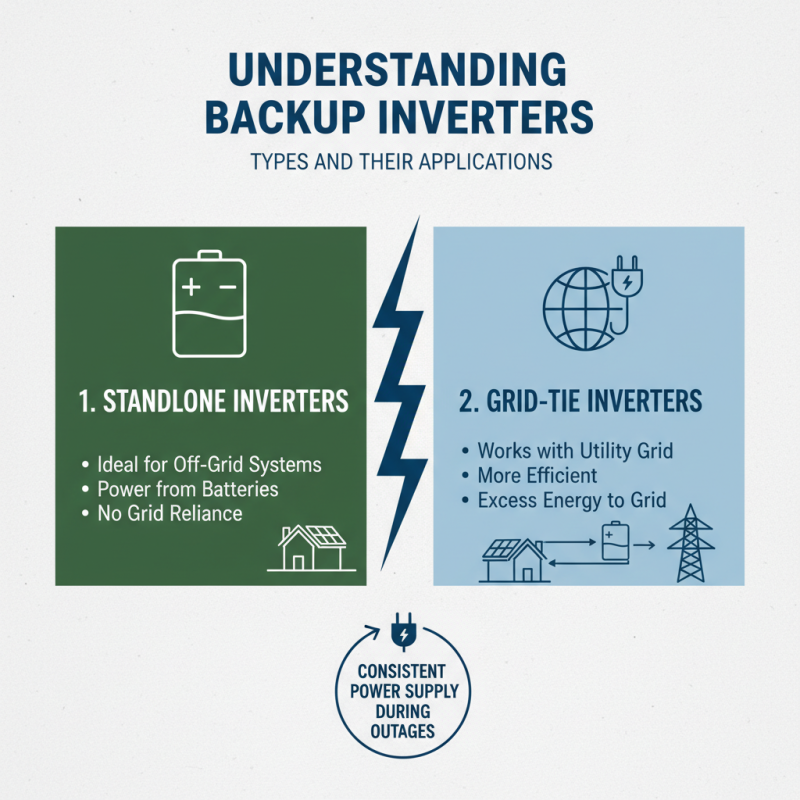
Understanding Backup Inverters: Types and Their Applications
Backup inverters play a crucial role in ensuring a consistent power supply during outages. Understanding the different types and their applications can help you choose the right model for your needs. There are mainly two types: standalone inverters and grid-tie inverters. Standalone inverters are ideal for off-grid systems. They provide power from batteries without relying on the grid. Grid-tie inverters, however, work in conjunction with the utility grid. They are more efficient and allow for excess energy to be sent back.
In 2021, the global market for backup inverters was valued at approximately $4.5 billion. Industry experts forecast continued growth, driven by increasing demand for renewable energy sources. One critical factor in selection is the inverter's efficiency rating. Inverters operating at 90% efficiency are common, but higher-rated models can significantly reduce energy losses.
It's essential to consider operational needs. For example, a basic residential setup might only need a smaller inverter. However, deeper research may reveal that certain configurations can lead to wasted capacities. Evaluating your true energy requirements is vital to avoid oversizing your system. Regular maintenance and monitoring are also necessary to ensure longevity. Many users neglect this aspect, which can lead to performance issues. Therefore, a thoughtful approach is required to select the best backup inverter.
Key Specifications to Consider for Backup Inverter Selection
When selecting a backup inverter, several key specifications can guide your choice.
Power capacity is a primary factor. This is measured in watts.
Assess your power needs carefully. Calculate the total wattage of the devices you plan to connect.
Ensure the inverter can handle this load comfortably.
Efficiency rating is crucial, too. It indicates how well the inverter converts DC to AC power.
A higher efficiency means less energy waste. Look for models with an efficiency of over 90%.
This can save you money in the long term.
Tips: Consider the inverter's surge capacity. Some devices need extra power at startup.
Verify if the inverter you choose can manage this surge without problems.
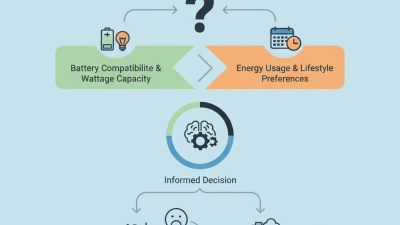
Pay attention to battery compatibility as well. Not all inverters work seamlessly with all batteries.
This compatibility can affect performance and lifespan.
Be sure to gather ample information. Choosing the right inverter may require research and contemplation.
Take your time to ensure you make an informed decision.
Evaluating Power Capacity: How Much Energy Do You Need?
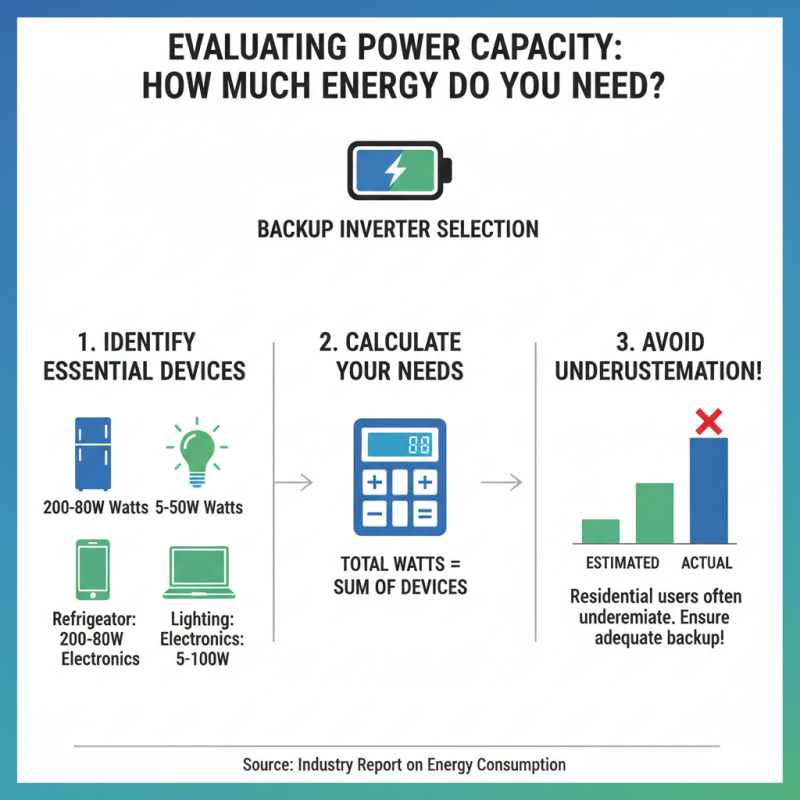
Evaluating power capacity is crucial when selecting a backup inverter. To determine how much energy you need, consider your essential devices. Common household items, like refrigerators, require around 200 to 800 watts. Meanwhile, lighting and electronics typically use less. A recent industry report indicates that residential users often underestimate their energy consumption, leading to inadequate backup solutions.
When assessing your energy needs, create a list of devices. Note the wattage of each and add them up. Remember, some appliances need extra power to start. For example, a central air conditioner might require double its running watts at startup. This spike can catch many off-guard, so careful planning is key.
**Tip:** Always choose an inverter with a capacity larger than your calculated needs. This ensures you can handle spikes and additional devices if necessary.
**Tip:** If budget allows, consider an inverter with advanced features, such as a pure sine wave output. This provides cleaner energy, protecting sensitive electronics. A thorough understanding of your power needs will guide you in making a more informed choice.
The Importance of Efficiency Ratings in Backup Inverter Performance
When selecting a backup inverter, efficiency ratings play a crucial role in performance. Efficiency ratings indicate how well an inverter converts stored energy into usable electricity. An inverter with a high efficiency rating, typically above 90%, can significantly reduce energy loss during the conversion process. According to the U.S. Department of Energy, even a 1% increase in efficiency can lead to substantial savings over time.
Choosing an inverter with the right efficiency rating can make a difference. Many reports indicate that users might overlook this aspect, focusing instead on price or brand reputation. However, a more efficient inverter can lead to lower operational costs and longer battery life. A study by the Solar Energy Industries Association revealed that efficient inverters contribute to better overall system performance, especially in off-grid situations where reliability is key.
Not all inverters are created equal. Some may advertise particular features but fail to provide adequate efficiency. It is essential to balance power needs with efficiency ratings. Take time to analyze different options. A less efficient inverter could end up costing more in the long run due to increased energy losses and potential system overloads. The emphasis on efficiency is not merely a trend; it is a vital consideration that enhances performance and cost-effectiveness.
Cost vs. Reliability: Finding the Best Value in Backup Inverters
When choosing a backup inverter, it’s crucial to weigh cost against reliability. A cheaper inverter may seem appealing at first. However, it could fail during a critical moment, leaving you without power. Consider how often you experience outages. If they’re frequent, investing in a reliable inverter is essential.
Reliability means not just uptime, but also the durability of materials. Inverters can be exposed to varying temperatures or weather conditions. Look for units that have been tested for such environments. Reading user reviews can provide insight into real-life performance. Sometimes, experience reveals issues that specifications do not cover.
It’s also wise to evaluate warranties and customer support. A longer warranty could indicate confidence in a product's reliability. However, a brand with poor customer support could make dealing with issues frustrating. Track your expenses versus potential losses during a power outage. You may find spending more initially can save you money and stress in the long run.
How to Choose the Best Backup Inverter for Your Needs?
| Inverter Type |
Power Rating (W) |
Efficiency (%) |
Price ($) |
Warranty (years) |
Reliability Rating (1-10) |
| Modified Sine Wave |
1000 |
85 |
150 |
1 |
5 |
| Pure Sine Wave |
1500 |
90 |
350 |
2 |
8 |
| High-Frequency Inverter |
2000 |
92 |
500 |
3 |
9 |
| Low-Frequency Inverter |
3000 |
88 |
800 |
5 |
10 |