Why Choose Electric Inverters for Your Business Needs?
In today's competitive business landscape, making the right technology choices is crucial. One option gaining traction is the Electric Inverter. This device plays a vital role in energy management. It converts DC power into AC power, helping businesses run efficiently.
Electric Inverters offer numerous benefits. They enhance energy efficiency and reduce operational costs. Many companies report decreased electricity bills after adopting this technology. Additionally, Electric Inverters improve equipment lifespan. With fewer energy spikes, machinery operates more smoothly.
Some businesses may hesitate. They worry about the initial investment. While upfront costs can be significant, the long-term savings are substantial. Companies need to evaluate their energy needs. Investing in an Electric Inverter might be a pivotal decision for future success. The landscape of energy consumption is evolving, and businesses must adapt.
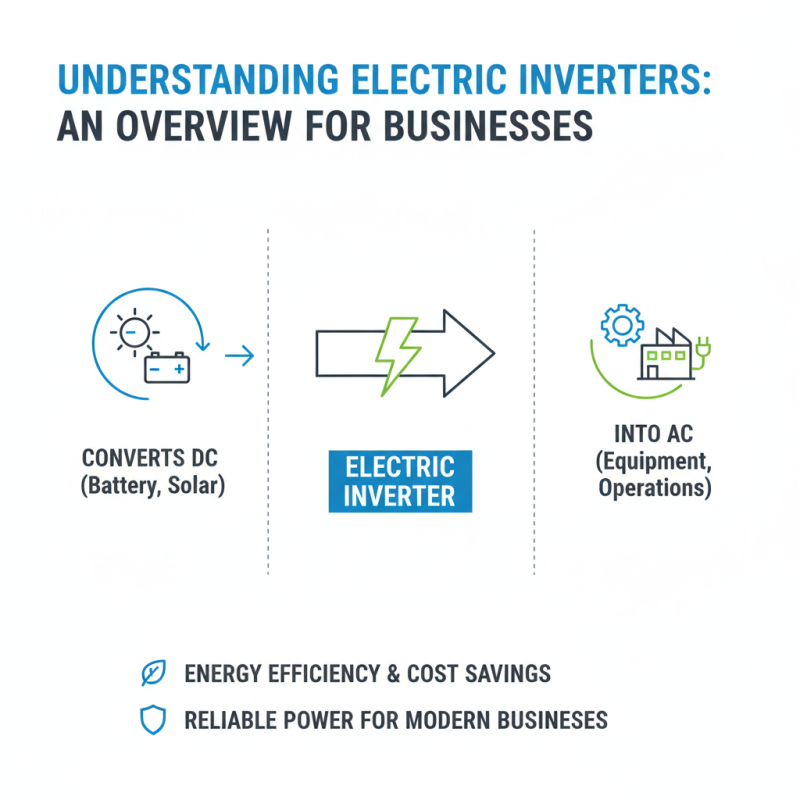
Understanding Electric Inverters: An Overview for Businesses
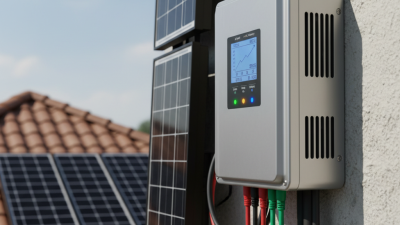
Electric inverters are essential for modern businesses seeking reliable power solutions. They convert direct current (DC) into alternating current (AC), making them suitable for a range of applications. This transformation is crucial for powering equipment and maintaining operations in various sectors. Businesses can leverage inverters to manage energy efficiently, leading to cost savings.
Understanding the types of electric inverters is important. There are string inverters for solar power systems and central inverters for larger setups. Each type has unique advantages based on specific needs. However, selecting the right inverter can be challenging. Businesses must consider factors like load requirements, installation costs, and maintenance. Misjudging these can lead to inefficiencies or unexpected expenses.
Implementing electric inverters can improve energy independence. Businesses harness solar energy and reduce dependency on traditional power sources. This transition requires careful planning and skilled expertise. Frequent monitoring and adjustments may be necessary to optimize performance. This highlights the importance of ongoing evaluation and adaptation in any energy strategy.
The Advantages of Electric Inverters Over Traditional Power Solutions
Electric inverters have become a vital solution for businesses seeking efficient power management. Unlike traditional power sources, they convert direct current (DC) to alternating current (AC) with minimal energy loss. This conversion process is crucial for modern operations, ensuring that devices receive the right type of power. The compact design of electric inverters allows for installation in smaller spaces, making them ideal for various business environments.
Tips: When choosing inverters, evaluate your energy needs. Select models that offer scalability and efficiency. Regular maintenance checks can prolong their lifespan.
Another advantage lies in their ability to harness renewable energy. Many electric inverters can integrate solar and wind power, significantly reducing operational costs. This shift helps businesses adopt sustainable practices, fostering a positive brand image. Nevertheless, transitioning from traditional systems to modern inverters may require upfront investments and training for staff.
Tips: Assess initial setup costs versus long-term savings. Ensure your team understands the technology to maximize performance. Regular monitoring of energy usage can optimize the benefits.
Why Choose Electric Inverters for Your Business Needs? - The Advantages of Electric Inverters Over Traditional Power Solutions
| Feature |
Electric Inverters |
Traditional Power Solutions |
| Energy Efficiency |
High efficiency with less energy loss |
Lower efficiency resulting in higher energy costs |
| Initial Cost |
Higher initial investment |
Lower upfront costs |
| Maintenance |
Lower maintenance requirements |
Higher maintenance and repair costs |
| Reliability |
More reliable with fewer failures |
Can suffer from frequent breakdowns |
| Environmental Impact |
Lower carbon footprint |
Higher emissions and environmental impact |
| Flexibility |
Easily adaptable to different energy sources (solar, wind) |
Limited adaptability to new technologies |
Key Features to Consider When Selecting Electric Inverters
When selecting electric inverters for business needs, several key features stand out. Efficiency is crucial. According to the U.S. Department of Energy, the efficiency of modern inverters can exceed 95%. This means less energy loss and better cost savings. Look for inverters with a high efficiency rating to maximize your return on investment.
Adaptability is another important feature. Inverter technology is evolving rapidly. Many businesses need systems that are flexible and can integrate with renewable energy sources. Reports show that 30% of businesses prefer inverters that support battery storage. This allows for energy management that adapts to usage patterns. A non-compatible system can lead to missed opportunities and unnecessary expenses.
Reliability is indispensable. A study from the National Renewable Energy Laboratory indicates that systems with higher reliability reduce downtime by 20%. Inconsistent performance can disrupt operations. Businesses should assess warranty terms and support structures. A robust warranty signifies trust in the product. Many businesses overlook these crucial aspects, often leading to costly mistakes. Consider these essential features to make an informed choice.
Cost Efficiency and Return on Investment of Electric Inverters
Electric inverters have become essential tools for many businesses. The cost efficiency of electric inverters is often highlighted in industry reports. According to the International Energy Agency, businesses can save up to 30% on their energy bills by using electric inverters. This significant reduction adds up over time and can contribute directly to a company’s bottom line.
The return on investment (ROI) for installing electric inverters has been shown to be positive. A study by the U.S. Department of Energy indicates that companies typically see an ROI of 15-20% within the first year of use. This is crucial for businesses with tight budgets. However, the initial investment can be a barrier for some. It’s essential for decision-makers to analyze all costs and benefits carefully.
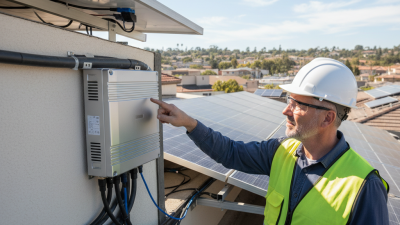
Moreover, while electric inverters lower energy costs, their installation and maintenance require expertise. Not all installers have the same level of expertise. Some may miss critical details that could lead to inefficiency. Regular reviews of system performance are necessary to maintain efficiency and ensure that the inverter operates at optimal levels. A thoughtful approach to selecting and maintaining electric inverters can lead to lasting benefits for your business.
Applications of Electric Inverters in Various Industries
Electric inverters are transforming various industries, providing reliable power solutions. In manufacturing, they enhance energy efficiency and reduce operational costs. According to a report by MarketsandMarkets, the global inverter market is projected to grow from $12.3 billion in 2020 to $19.4 billion by 2025. This reflects the increasing adoption of inverter technology across sectors.
In the renewable energy sector, electric inverters are essential for converting DC power from solar panels into usable AC power. This conversion supports grid integration and boosts energy reliability. The Global Solar Council estimates that solar energy will account for nearly 22% of the world's energy supply by 2040. Using electric inverters in this context maximizes energy output and minimizes losses.
*Tips:* When implementing electric inverters, consider the system's compatibility with existing equipment. Regular maintenance is crucial for optimal performance. Overlooking small issues can escalate costs significantly. Additionally, it's wise to explore different applications in your industry to find suitable solutions tailored to your specific needs.
Applications of Electric Inverters across Various Industries